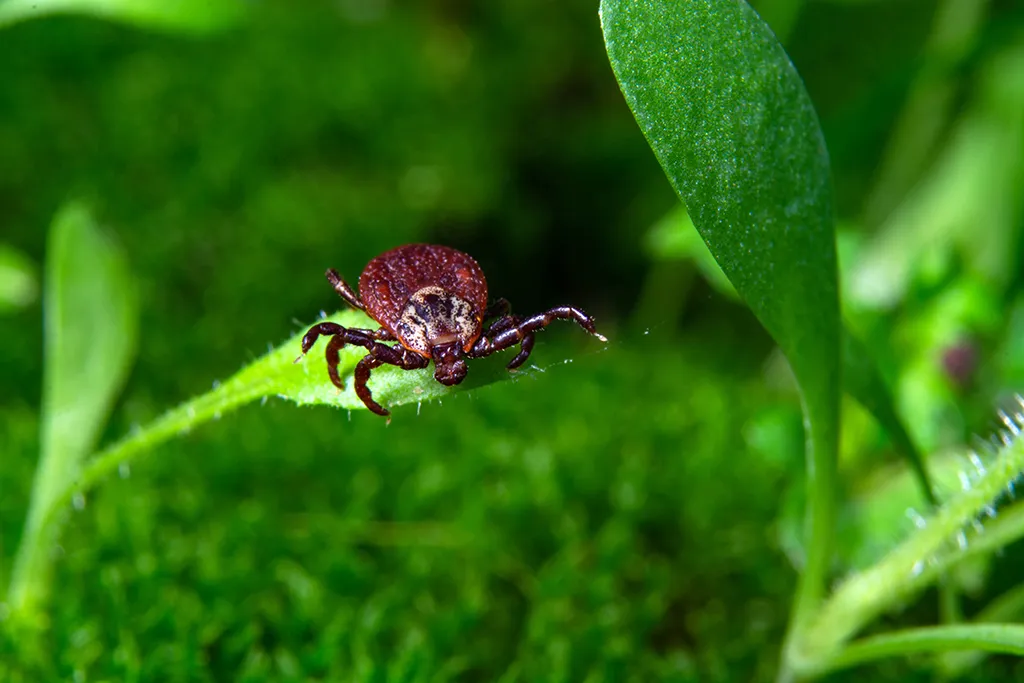
These tiny, blood-sucking creatures don’t just show up randomly. Ticks have certain habitats and behaviors that lead them to humans and pets. They like outdoor spots with tall grass, thick plants, leaf litter, and woods. These places help them find hosts, such as deer, rodents, and birds.
Ticks thrive in humid environments and are often found in shaded, moist areas such as forests and meadows.
How do ticks find you?
Ticks usually find you in tall grass, along hiking trails, and at the edges of woods. They exhibit an interesting behavior called "questing." This helps them search for and cling to hosts that come by.
During questing, ticks climb to the tips of grasses or shrubs and extend their front legs, waiting patiently for a host to brush by. When a person or animal comes near, the tick quickly grabs onto fur, clothing, or skin.
Ticks cannot jump or fly, so they rely entirely on direct contact to transfer from vegetation to their hosts.
Where do deer ticks come from?
The black-legged tick (known as the deer tick), can spread Lyme disease, the most common tick-borne illness in the U.S.
Deer ticks are named for their favorite hosts. White-tailed deer are the main reproductive hosts for adult deer ticks.
Need Pest Service?

At East End Tick & Mosquito Control®, we’re always ready to help you with your pest control needs. Contact us for a free, no obligation quote, or call us at 631-287-9700 to get started today.

Need Pest Control Service?
Leave your information below and we’ll be in touch shortly. After hours calls will be returned the next business day.
These reddish-brown ticks with black legs are often found in wooded grass areas. You can see them in the northeastern, mid-Atlantic, and upper midwestern U.S.
Prevent Ticks From Coming to You
Personal Protection:
- Wear long pants, socks, and long sleeves when entering grassy, bushy, and wooded areas.
- Tuck pants into socks or boots to create an extra barrier against climbing ticks.
- Use EPA-registered insect repellents on exposed skin and clothing.
- Wear light-colored clothing to make ticks easier to spot.
- Stick to the center of cleared paths and avoid walking through tall grass and other areas where ticks are more likely to be.
Regular Inspections:
- Conduct tick checks every two to three hours while outdoors.
- Thoroughly check yourself, your children, and your pets when you return indoors.
- Begin with your scalp, as ticks can often hide there.
- Use a mirror or ask someone to help you check hard-to-see areas such as behind the ears, underarms, and around the groin.
- For pets, check their fur and skin, paying attention to areas where ticks might latch on.
Yard Maintenance:
- Keep grass mowed short and remove leaf litter regularly.
- Create a barrier of wood chips or gravel between wooded areas and your lawn.
- Remove brush and tall grasses around your home's perimeter.
- Keep playground equipment and outdoor seating areas away from yard edges and trees.
- Consider installing fencing to keep deer and other tick-carrying animals out of your yard.
With the right combination of personal protection, property maintenance, and professional pest control services when needed, you can significantly reduce your risk of tick bites and the diseases they may carry.