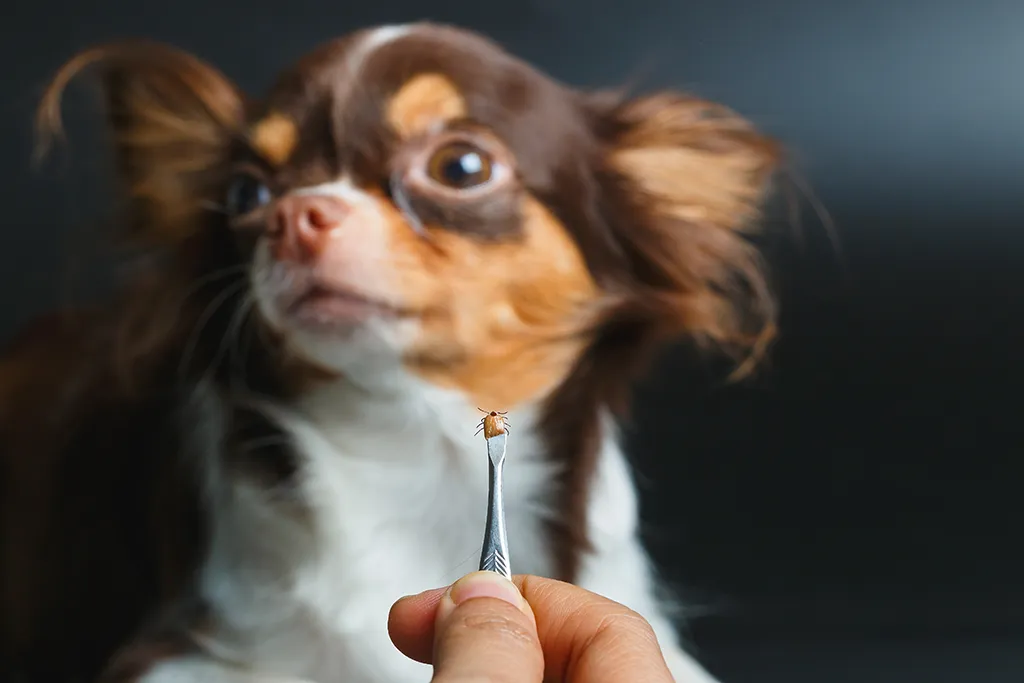
Your furry friends need the best defense against nature's tiny vampires. Ticks can transmit diseases like Lyme disease to pets if they are bitten.
Proper pest control helps pets by cutting down their exposure to harmful pests, like ticks and fleas. Outdoor tick control lowers the tick population near your home and helps reduce the chance of ticks biting your pets.
Here's everything you need to know about keeping your dogs and cats protected from these persistent parasites.
Flea and Tick Prevention for Cats
Cats pose special challenges for pest control. Their careful grooming habits and sensitivity to pyrethroids and other pesticides make it tricky. A single flea can cause serious allergic dermatitis in sensitive cats. They can also spread bacteria that lead to cat-scratch fever.
For cat owners, additional safety measures include:
- Ventilation: Make sure the treated areas are well-ventilated. Then, you can let your cats back in.
- Indoor protection: Many cats are indoor pets. Our interior flea control services ensure your home is fully protected.
Need Pest Service?

At East End Tick & Mosquito Control®, we’re always ready to help you with your pest control needs. Contact us for a free, no obligation quote, or call us at 631-287-9700 to get started today.

Need Pest Control Service?
Leave your information below and we’ll be in touch shortly. After hours calls will be returned the next business day.
Dog Flea & Tick Prevention
Fleas cause constant itching, but they also spread diseases. They can carry tapeworms and cat scratch disease.
Professional pest control treatments are effective for homes with dogs. To protect your dog during pest control services:
- Secure your pets: Keep dogs in a room away from the treated areas while the pest control service is being performed.
- Observe drying times: Follow your technician's guidance on when it's okay for pets to return to treated areas. While drying times can vary depending on the weather, they generally average around two hours.
- Remove pet items: Take away food and water bowls, bedding, toys, and any other dog items from the treatment areas.
Prevent Ticks in Dogs and Cats
To stop ticks, use a multi-faceted approach. Focus on your home environment and your pets' specific needs.
For pets that spend time outdoors, creating a tick-free zone around your property is essential. Professional tick control plus help from your veterinarian is your best defense.