When warmer weather arrives in Southampton, tick activity increases dramatically across the region. From April through November, these blood-feeding parasites actively search for hosts (including humans and pets) to feed on.
Beyond the discomfort of their bites, ticks pose serious health risks by transmitting dangerous illnesses like Lyme disease, Rocky Mountain spotted fever, and Tularemia. So protecting your family means understanding how to properly extract these pests when they attach to your skin.
Tick Species in Southampton
Recognizing different tick types helps you understand the potential risks you’re facing. Three primary species inhabit Southampton:
- American Dog Tick: Similar in size to the lone star variety but featuring a darker body and shorter mouthparts, this tick frequently targets canine companions and represents the most common culprit behind dog tick bites.
- Deer Tick (Blacklegged Tick): The smallest and darkest of the three, this tick primarily feeds on rodents and birds but readily seeks human hosts when available. This species is the primary carrier of Lyme disease in our area.
- Lone Star Tick: Distinguished by its elongated mouthparts and signature white marking on its back, this species thrives in brushy terrain frequented by deer and other woodland creatures.
All three species can transmit diseases, making prompt removal essential whenever you discover one attached to your skin.
At East End Tick & Mosquito Control®, we’re always ready to help you with your pest control needs. Contact us for a free, no obligation quote, or call us at 631-287-9700 to get started today.

Leave your information below and we’ll be in touch shortly. After hours calls will be returned the next business day.
Tick Removal Steps
The Centers for Disease Control and Prevention outlines this safe removal process:
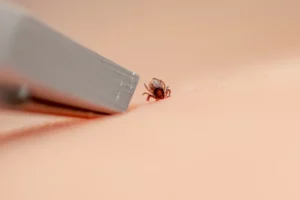
- Grasp the tick with fine-tipped tweezers as close to the skin surface as possible.
- Apply steady, even pressure while pulling straight upward. Avoid twisting or jerking motions that could cause the mouthparts to detach and remain embedded. If pieces break off, carefully extract them with the tweezers.
- Thoroughly disinfect the bite area using rubbing alcohol, soap and water, or iodine scrub.
- Dispose of the tick safely by submerging it in alcohol, sealing it in a bag for trash disposal, or flushing it down the toilet. Never crush a tick between your fingers.
Acting quickly after discovering an attached tick significantly reduces disease transmission risk. Monitor the bite site for several weeks.
If you develop a rash, fever, or flu-like symptoms, inform your healthcare provider right away about the tick encounter, including when and where it likely occurred.
Professional Tick Control Services in Southampton
If you’re experiencing repeated tick encounters on your property this season, professional intervention offers the most effective solution.
Our tick control experts provide comprehensive yard spraying services every four weeks during tick season (April through November), treating your lawn, landscaping, and property perimeter to eliminate active ticks and establish a protective barrier around your home.
For year-round protection, we also offer pre-emergent granular treatments from December through March that target overwintering ticks before they become active.
Ready to protect your Southampton property from ticks? Contact us today for a free estimate and let our friendly experts help keep your family safe from tick bites this season and beyond.