
Tick Control in The Hamptons
Get a Free, No-Obligation Quote
Leave your information below and we’ll be in touch shortly. After hours calls will be returned the next business day.
Certified Pest Management Professionals
Natural & Eco-Friendly Solutions Available
Exceptional Customer Service
Trusted by the Community Since 1997
Serving Southold, The Hamptons, and Montauk
Ticks can be a serious problem in Southampton. When they’re transported on animals such as deer and raccoons, infestations can appear out of seemingly nowhere. The good news is that we offer expert tick treatments by experienced tick exterminators that protect your property, including your lawn and garden.
If you need tick control services in Southold, The Hamptons, and Montauk, you can trust East End Tick & Mosquito Control® to work quickly and efficiently. Call us today for a free inspection.
Why You Need Professional Tick Exterminators
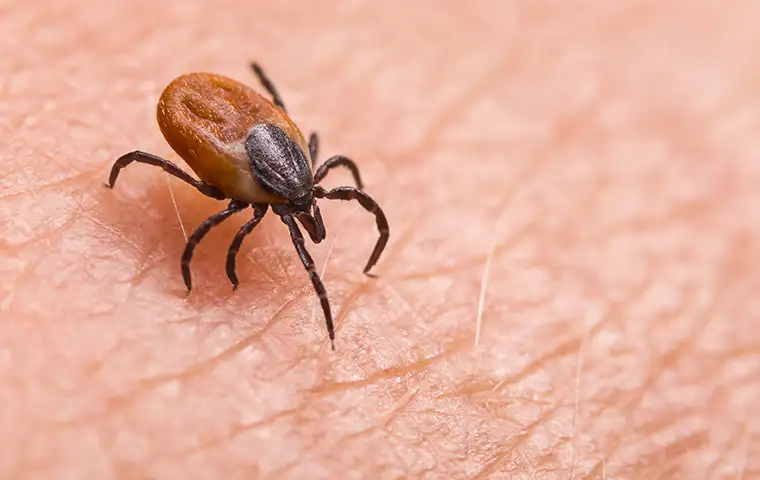
Ticks are one of the worst pest infestations because many carry diseases. In fact, the CDC names over 15 different diseases that originate from tick-carried pathogens. Some, such as Lyme disease, are incredibly debilitating if early intervention is not taken.
The three most common tick species on Long Island include:

Our Re-treat Guarantee
The Re-Treat Guarantee means that if ticks come back, so do we – to re-treat at no additional cost. No excuses, just a commitment to care for your home like it’s our own with protection you can trust.
Leave your information below and we’ll be in touch shortly. After hours calls will be returned the next business day.
Tick Spraying – Highly Effective In-Season Tick Control
It can be quite difficult to spot a tick infestation at first. However, once ticks are spotted, professional tick control services are your best defense. For maximum protection, we recommend tick spraying service every four weeks while these pests are in season from April through November. We spray your lawn, landscaped areas, and the perimeter to kill ticks and create a protective buffer zone around your property.
Tick Spraying Treatment FAQs
Why get tick spraying?
Tick spraying is the most effective in-season treatment for the immediate elimination of active ticks on your property.
Where is it applied?
We spray your lawn and landscaping with the aim of creating as much coverage as possible. We do not spray against the foundation. Many clients ask us to spray into the woods. We always tell them we can spray a buffer into the woods, but our technicians will not walk into the woods.
When is it applied?
We recommend this treatment every four weeks between April and November, as long as needed. We are also happy to offer one-time service or semi-regular service for rental properties. If you have any questions or would like a free estimate, please give us a call and speak with one of our friendly experts.

Tick Tubes – Treatment for the Beginning and End of Tick Season
Tick Tubes are small biodegradable cardboard tubes filled with pesticide-treated cotton. Our technicians place them strategically around the property where rodents tend to live, like under the deck, woodpile, under the shed, and any other hotspots they identify.
Tick Tube Treatment FAQs
Why use tick tubes?
This is a great addition to a monthly tick control spray service, best for long-term prevention at the beginning of the season and maintenance at the end of the season.
How do tick tubes work?
Rodents use the cotton as nesting materials. When the tick-infested rodent lies on the cotton, the ticks are killed. Rodents carry hundreds of ticks.
Where are they applied?
Tick tubes are placed in areas where rodents are known to traffic. By eliminating ticks on rodents, it goes a long way toward eliminating ticks on your property, pets, and family.
When should tick tubes be applied?
One or two applications per year at the beginning and end of the season.
Tick Shield – Our Granular Pre-Emergent Tick Treatment
Tick Shield is a pre-emergent tick control treatment that can be applied from December through March. It’s a highly effective granular tick treatment that can give year-round protection against tick bites in yards, including on beautiful grassy lawns.
Tick Shield Pre-Emergent Tick Treatment FAQs
Why use granular pre-emergent tick treatment?
Tick season comes around the same time every year, and pre-emergent treatment waits for them, ready to stop ticks before they can establish themselves. On those warmer winter days when the temperature rises above freezing, the ticks that have not fed will emerge looking for a blood meal. Tick Shield will be waiting when they emerge, giving you the ultimate protection against tick bites in your yard.
How does granular tick treatment work?
Our technicians spread Tick Shield into the leaf litter on the edges of the property and into your shrub beds where ticks are overwintering. We use Bifen LP, which controls ticks for two to three months around your property.
Where is Tick Shield applied?
Our technicians will perform a granular tick preventive treatment on the perimeter surrounding your property and shrub beds where ticks are overwintering.
When is it applied?
Pre-emergent Tick Shield can be applied monthly from December through March. If you miss treatments in December, January, and February, it’s still a good idea to get it in March, as it can make a big difference for the season ahead.

When Should I Get Tick Control?
Did you know that ticks are active and on the hunt anytime the temperature is above freezing? There will be plenty of warm days this year, too. It’s important to prevent these pests year-round.
Since a tick population boom can happen quickly and without obvious notice on your property, we suggest spraying for ticks every month during the active tick season of April through November.
We offer one-time tick treatments and service plans that allow us to spray once a month so that the population in your home or business never has a chance to grow, and the problem is controlled at the source. With a tick control service plan, we set up scheduled appointments for tick spraying so that your property remains tick-free during their peak months and even offer off-season tick control services to reduce the chances of infestations during milder winter months.
How Do You Know If You Have a Tick Infestation?
Most of the time, it’s by spotting the ticks themselves. However, ticks are small, particularly before they feed, which means you might not notice them until one is already attached to you, a family member, or a pet.
It’s a good idea to be aware of areas that are conducive to ticks. Areas on your property with tall grass, overgrown vegetation, and wooded spots are perfect. These shaded, densely vegetated environments are potential tick hotspots, increasing the likelihood of their presence. Identifying these environments is essential for effective tick prevention.

Why Choose East End for Tick Control?
We understand you have more than one choice for tick control on Long Island, but we hope you’ll choose us. We are committed to providing friendly service and dependable results, alongside these key benefits:
- Local Technicians: Our specialists possess specific training in tick biology and control strategies tailored to Long Island and The Hamptons’ unique challenges.
- Tick-Specific Expertise: Unlike most pest control companies that treat everything, we focus on ticks (and mosquitoes) exclusively. This gives us an advantage when it comes to providing tick-specific treatments that really work.
- Comprehensive Treatment Strategies: We utilize state-of-the-art products and a custom plan for your property.
- Fast Service: We are ready to address your tick control needs promptly and effectively with our local team. We also provide party spraying tick services on short notice.
- Clear Communication and Actionable Advice: We ensure you have a complete understanding of the issues and the actions we take. We also provide practical tips for maintaining a long-term, tick-free environment. Have more questions? We are always available to help.
Tips to Prevent Tick Infestations
As your full-service pest prevention expert, we want to provide some helpful tips so that your property remains as tick-free as possible:
- Reduce wildlife accessibility to your property.
Ticks gain their mobility by being transported on the wildlife of Southold NY’s woods. To prevent an infestation on your property before it even happens, we suggest closing off any entrance from wooded areas or areas with tall grass, and eliminating plants that may attract deer. By utilizing fences or netting to close off these areas from your space, you can prevent deer from coming and bringing ticks with them. As fence construction can run up a substantial bill, we suggest wire fencing or plastic deer fence netting to avoid expensive costs.
- Make sure your property is clear of tick habitats.
Contrary to popular belief, ticks don’t live right in the middle of your lawn. In actuality, ticks often inhabit areas with ample amounts of shade and moisture, including leaf piles, woodpiles, and mulch beds. Keeping the area clear of debris is an important step in maximizing tick control on your property. We suggest raking up leaves, removing excess woodpiles, and keeping the grass short. This will help get rid of the area where ticks tend to populate.
- Create a tick-free perimeter.
Sometimes contact with ticks is unavoidable. In this case, we highly suggest creating a tick control perimeter around your property to mitigate the spread of ticks. To do this, lay down a 3-foot wide barrier of gravel around your property where there are wooded areas. This will provide a visual reminder for your family and guests to avoid this area. This gravel barrier can reduce the number of ticks that would otherwise get to your property.
The best option to control the tick population on your property is to have a professional yard spray service from East End Tick & Mosquito Control®.
East End Tick & Mosquito Control® has kept Southold NY families safe from ticks and mosquitos for over 20 years. Let us help protect you and your family this coming spring.


The Most Trusted Hamptons Tick Control Company
If you suspect that you have a tick infestation on your property on East Long Island, there’s no time to wait.
Contact East End Tick & Mosquito Control® today so that we can use our state-of-the-art tick services to solve the problem and give you back peace of mind.
Give us a call at any of our regional numbers or fill out our contact form here. We’ll be happy to schedule an appointment for one-time tick control or set up monthly service.
Long Island Tick FAQs
Tick Tubes are small biodegradable cardboard tubes filled with pesticide-treated cotton. Our technicians place them strategically around the property where rodents tend to live, like under the deck, woodpile, under the shed, and any other hotspots they identify.
How do you properly check for tick bites?
The key is to make a routine of checking yourself, pets, and children for ticks after spending time outdoors where they’re known to be present. Ticks will latch onto any part of the body, but often choose warm, hidden spots like armpits, behind your ears, in joints, or in hair.
Check out our full-length article to learn the proper technique for checking for ticks and tick bites.
Where do ticks come from?
Ticks can be found in many places, and they’re only becoming more and more common. Still, they’re not a recent phenomenon – preserved tick fossils have been discovered that are 90 million years old!
Check out our full-length article for a deep dive into the origins of ticks.
What’s the best way to protect my children from tick bites?
As a parent, the idea of your kids getting bitten by ticks is a frightening prospect. But there are a few things you can do to help prevent it. Start by making sure you’re aware of where they’re playing, and warn them to stay out of areas known to be infested with ticks.
Make sure they wear appropriate clothing – light colors work best, with long sleeves and closed-toed shoes. You can also try using a child-safe tick repellent if you know you’ll be spending a significant amount of time outdoors.
For more tips, be sure to check out these blogs:
How can you protect your pet from ticks?
If your pets spend long periods outdoors, we strongly recommend talking to your vet and choosing a preventive tick treatment for proactive protection. Along with professional tick treatment for your yard, it’s the single most effective thing you can do.
Here are some additional tips to protect your dog or cat from ticks.
Is the Lone Star tick common on Long Island?
Yes, unfortunately, the Lone Star tick is becoming increasingly common in our region. It’s now one of the main tick threats you can find here. It didn’t used to be the case, but the Lone Star tick’s range has been expanding in recent years.
For more information, check out our full-length article on the spread of the Lone Star tick.
What are the main disease risks of ticks on Long Island?
Ticks are carriers of several diseases on Long Island. They include:
What They Say


Latest Blogs


Keeping You Pest-Free for Over 29 Years
Leave your information below and we’ll be in touch shortly. After hours calls will be returned the next business day.